

- Tasks defined for the effective organization of fruit and vegetable clusters 11
- The updated list of "red," "yellow," and "green" zones of the country has been published. 11
- The President Held a Meeting with the Activists of Bektemir District. 11
- The deputies approved the candidacy for the position of Minister for Support of Mahalla and Family of the Republic of Uzbekistan. 11
- The President of Uzbekistan Addressed the 78th Session of the UN General Assembly. 10

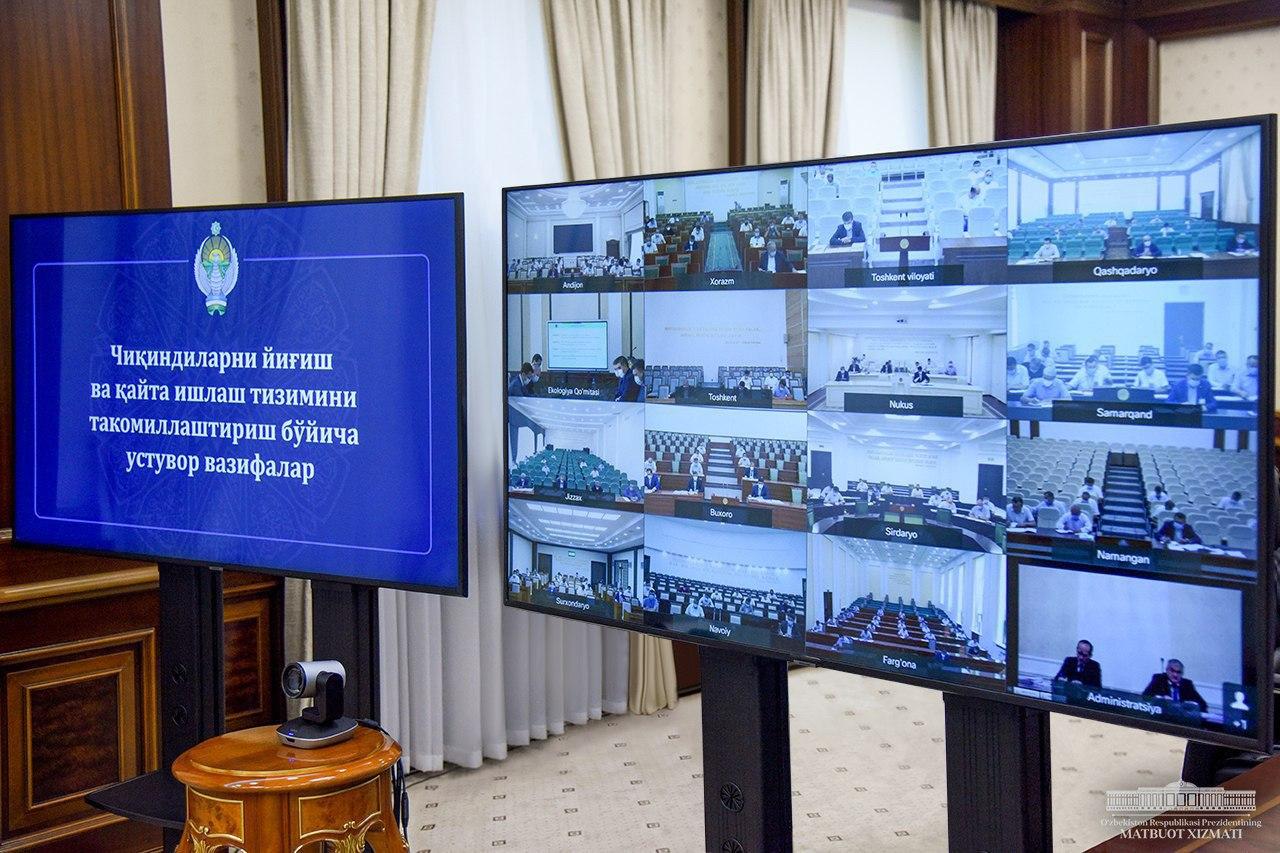
On 10 August, President of the Republic of Uzbekistan Shavkat Mirziyoyev held a meeting to discuss strengthening public health and safety, ensuring environmental well-being, and improving the waste collection and recycling system.
At the beginning of the event, which was held via videoconference, the issue of combating the coronavirus pandemic was addressed. In particular, it was noted that the number of hospital beds and the availability of medical equipment had increased significantly, while coordination between emergency medical services and healthcare institutions had improved. As a result, the recovery rate among patients with coronavirus infection had risen over the past week.
It was emphasised that it is important to continue living and working under pandemic conditions without reducing attention to protecting the lives and health of citizens, while gradually easing quarantine restrictions.
In our country, environmental security is regarded as one of the priorities of state policy. Extensive afforestation is being carried out on the dried seabed of the Aral Sea, and programmes for the development of the Aral Sea region are being implemented. Consistent efforts are being made to collect and recycle waste in order to protect the environment and safeguard public health. The urgency of this issue has become even greater under the current pandemic conditions.
“Putting the waste management system in order is one of the most important tasks for our lives and health. This is a public health issue and an urgent problem directly linked to the future of the nation,” said President Shavkat Mirziyoyev.
Over the past three years, 390 billion soums allocated from the state budget for waste management have been used to purchase 742 waste collection vehicles and modernise 204 landfill sites.
At the meeting, which was held in a critical tone, numerous problems in this area were highlighted. For example, coverage of sanitation services in Izboskan, Guzar, Chust, Buvayda, Urgut and Shakhrikhan districts is twice as low as the national average. Cases of the misappropriation of specialised vehicles purchased with budget funds were identified: 32 vehicles in Tashkent Region and 23 in Kashkadarya Region. The enterprises of “Toza Hudud” have substantial accounts receivable.
The state of affairs in the sector was critically reviewed at a meeting held in March this year, when relevant instructions were issued. Today, their implementation was reviewed and additional tasks were identified.
Currently, 66 percent of the population is covered by sanitation services. The meeting emphasised the need to increase this figure to 90 percent by the end of the year, including through the broad involvement of private companies in the sector.
It was decided that separate resolutions would be adopted for all 14 regions, broken down by district, to organise waste processing, with a monitoring system introduced to oversee their implementation.
The involvement of the non-governmental sector has demonstrated good results in waste collection and processing. In all areas where such enterprises operate, residents are satisfied with the quality of services. For example, Bio Techno Eco LLC purchased 78 specialised vehicles and pieces of equipment using a loan of more than 6 million US dollars. The company provides sanitation services to 285,000 residents of the city of Termez and the Termez and Angor districts.
There are also many entrepreneurs in the regions willing to implement similar projects. In this regard, the relevant officials were instructed to organise 31 clusters based on public-private partnerships in the Republic of Karakalpakstan and the regions.
Through these projects, the level of household waste recycling is to be increased to 25 percent by the end of the year and to at least 35 percent in 2021.
The importance of addressing the situation at 51 landfill sites that do not meet sanitary and environmental requirements was emphasised. It was also noted that 26 landfill sites for construction waste and clusters for its processing should be established.
The meeting also discussed the effectiveness of using funds attracted from international financial institutions.
The relevant officials were instructed to accelerate the implementation of projects launched using these funds and commission the facilities within a short timeframe. The Head of State emphasised the importance of equipping the sector with economical, cost-effective machinery.
The President paid special attention to strengthening environmental oversight.

Emissions from certain factories exceed established limits, causing environmental damage and giving rise to justified public discontent.
In this regard, the State Committee for Ecology and Environmental Protection was instructed to equip every region with mobile laboratories to promptly analyse air pollution levels. The Deputy Prime Minister was tasked with developing a programme to install modern local treatment facilities and upgrade existing ones at 240 large industrial enterprises classified as posing a high or medium environmental risk.
At the meeting, reports were heard from the leadership of the State Committee for Ecology and Environmental Protection and the regional khokims.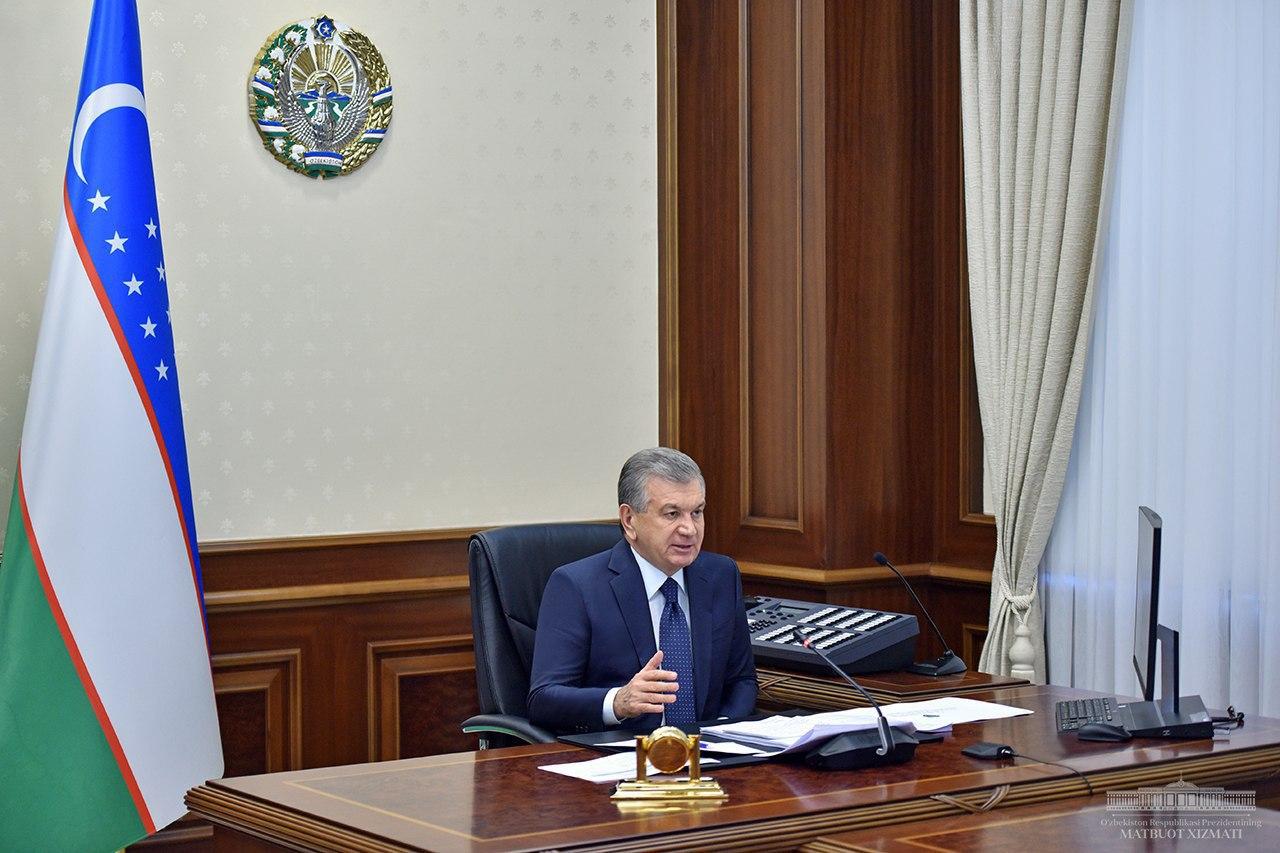



 1253
