

- The deputies approved the candidacy for the position of Minister for Support of Mahalla and Family of the Republic of Uzbekistan. 11
- Tasks defined for the effective organization of fruit and vegetable clusters 11
- The President Held a Meeting with the Activists of Bektemir District. 10
- Issues of reducing the shadow economy and preventing corruption were discussed 10
- The updated list of "red," "yellow," and "green" zones of the country has been published. 10

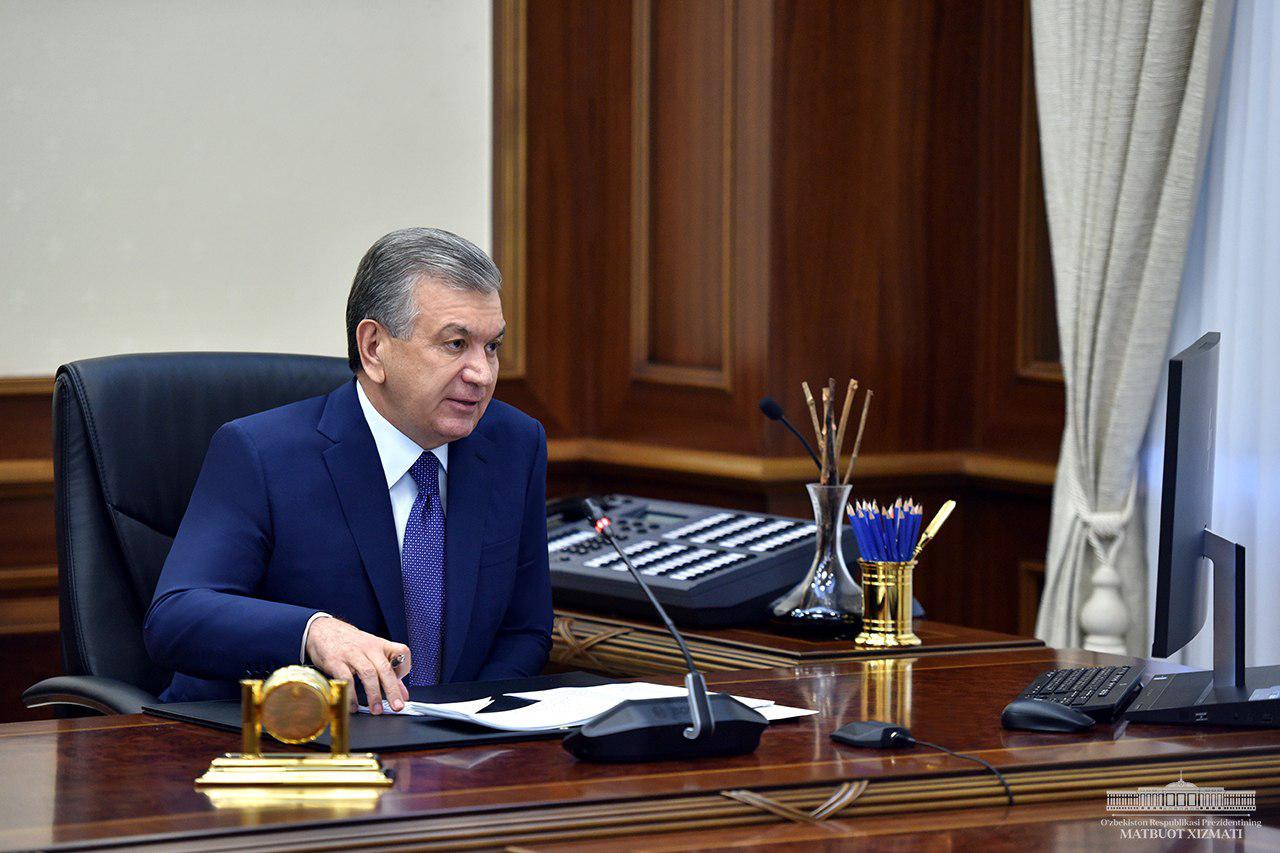
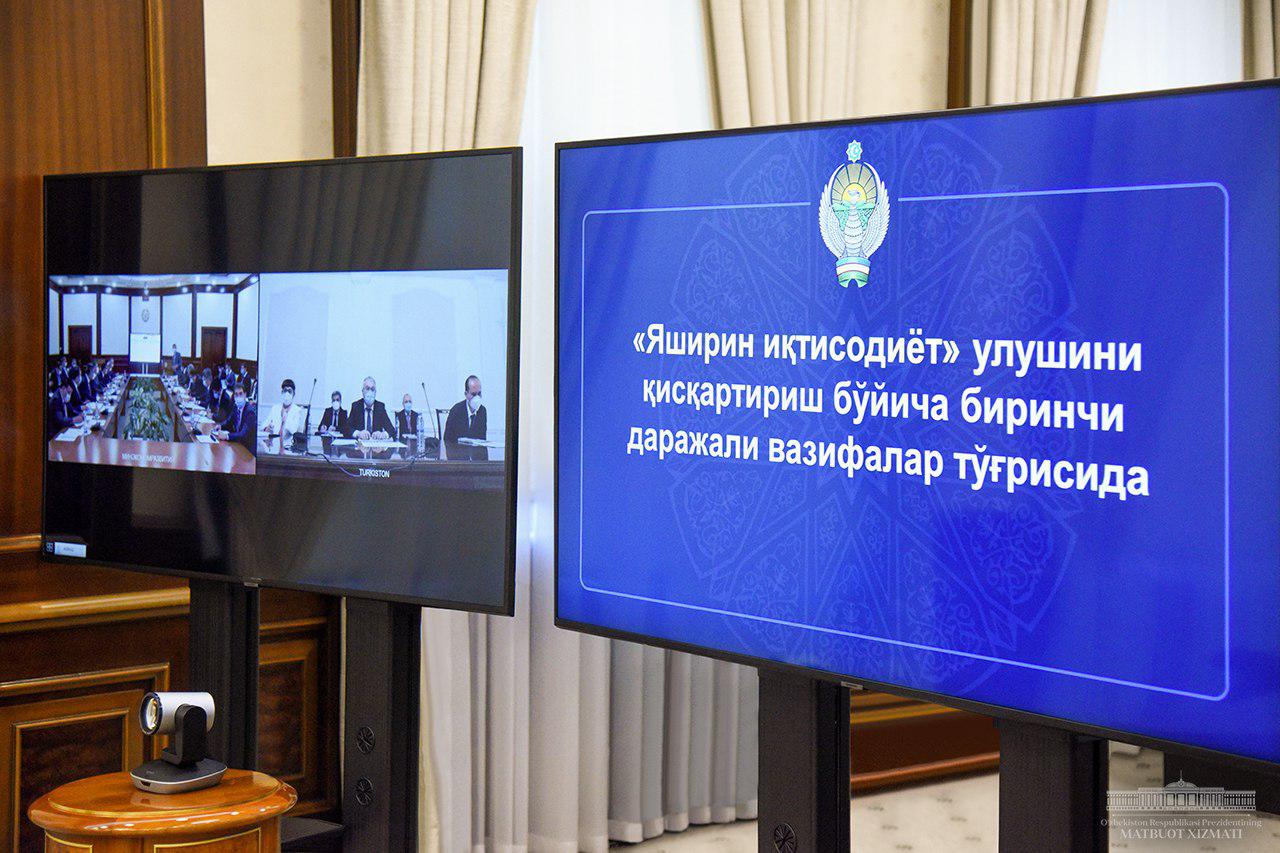
On July 27, President of the Republic of Uzbekistan Shavkat Mirziyoyev held a meeting dedicated to discussing the work being carried out to reduce the shadow economy.
Issues of Reducing the Shadow Economy and Preventing Corruption Discussed
The level of the shadow economy in our country is high. Therefore, in recent years, measures have been taken to reduce its share by making it easier to do business. In particular, the foreign exchange market was liberalized, a new tax system was introduced, and around 100 permit and licensing procedures were eliminated or simplified. As a result, the share of the informal sector in industry fell from 20 percent to 6 percent over the past five years.
The meeting reviewed the work being carried out in this area and identified further tasks. It was instructed to develop a strategy for reducing the shadow economy with the involvement of experts from international organizations.
The Head of State emphasized the importance of taking a cautious approach to combating the shadow economy so as not to harm economic activity, and of working in this area together with businesses and the public.
The task was set to continue tax reforms consistently and introduce a system that would prevent shadow economic activity.
An instruction was given to develop a “Conscientious Taxpayer” system and complete its pilot testing in Tashkent by the end of the year.
Particular attention was paid to eliminating corruption in public procurement and investment projects. To ensure transparency in these areas and strengthen public oversight and competition, the Ministry of Finance was instructed to launch an Information Portal for Public Procurement.
It was decided that every project would henceforth undergo an anti-corruption assessment. The task was set to apply this procedure, starting in 2021, to all projects financed from centralized funds.
A compliance control system to combat the shadow economy and corruption is also being introduced in government bodies. This work has begun, in particular, in the ministries of Construction, Healthcare, and Higher and Secondary Specialized Education, as well as in the joint-stock companies Uzbekneftegaz and Uzkimyosanoat. It was noted that by the end of the year, the system should also be introduced in 14 more organizations and 10 banks with state ownership.
Instructions were given to develop anti-corruption roadmaps for individual sectors and areas, and to prevent corruption in public procurement and investment projects.
It was instructed to develop a methodology for calculating shadow economy and corruption ratings for government bodies, enterprises, and regions. Starting in 2021, the results of these ratings will be published, with the personal responsibility of all heads assessed.
Issues concerning the customs and tax systems were also reviewed.
The need to eliminate the human factor in the customs system and strengthen customs controls to address smuggling and the artificial undervaluation of goods for customs purposes was highlighted.
The State Customs Committee and the State Tax Committee were instructed to create a unified database covering the import, customs clearance, and sale of imported goods. The task was set to introduce the “Customs Audit” information system from 1 January 2021.
The President emphasized that reducing the shadow economy requires helping people work legally and giving them an incentive to do so.
For example, as a result of simplifying the self-employment system, 184,000 citizens entered the formal sector in July alone.
However, the level of informal employment in construction, trade and catering, transport, and other service sectors remains high. Overall, only 4.9 million of the 13.5 million people employed in the economy pay personal income tax.
The meeting highlighted the need for targeted work in these sectors and for bringing businesses operating informally out of the shadow economy through incentive mechanisms. It was proposed that, when calculating turnover tax for businesses operating in trade, catering, transport, and household services, payments made using plastic cards and other contactless payment methods should be excluded from the taxable base.
The Head of State noted the need to simplify tax administration for small businesses and further reduce permit and licensing procedures for entrepreneurial activities.
For example, 100 types of licenses and 34 types of permits could be eliminated by replacing them with a notification-based procedure. A number of procedures could also be simplified, and the time required to issue 14 types of documents could be cut in half. These measures could save entrepreneurs 125 billion soums annually.
In addition, instructions were given to critically review the 270 supervisory functions of 43 government agencies and reduce their powers that contribute to the risks of the shadow economy and corruption.
At the same time, the need to strengthen the accountability of unscrupulous entrepreneurs involved in corrupt and shadow schemes was emphasized.
It was noted that the analysis of the shadow economy by industry and sector remains inadequate. In this regard, the need to maintain statistics on the shadow economy for each region, with the involvement of international experts, was highlighted.
The main force in combating corruption and the shadow economy is business and the public. Therefore, it is important to foster an intolerant attitude in society toward these negative phenomena and to highlight their consequences through the mass media and social networks.
“Combating the shadow economy does not mean punishing entrepreneurs or obstructing their activities. This is especially important during the pandemic. Strict measures must also be taken against everyday corruption, while strengthening public oversight at the local level,” said Shavkat Mirziyoyev.
Each ministry and sector was tasked with achieving specific key performance indicators (KPIs) by the end of the year as part of the implementation of the measures identified at the meeting.



 1253
